How Bulk Mylar Bags Cannabis Packaging Cut One Brand's Costs by 30%
Bulk mylar bags cannabis packaging is one of the most effective levers a mid-size cannabis brand can pull to reduce operating costs without sacrificing product quality or regulatory compliance. If you run a California cannabis operation and you're still sourcing your pouches in small lots, you're almost certainly leaving money on the table every single quarter.
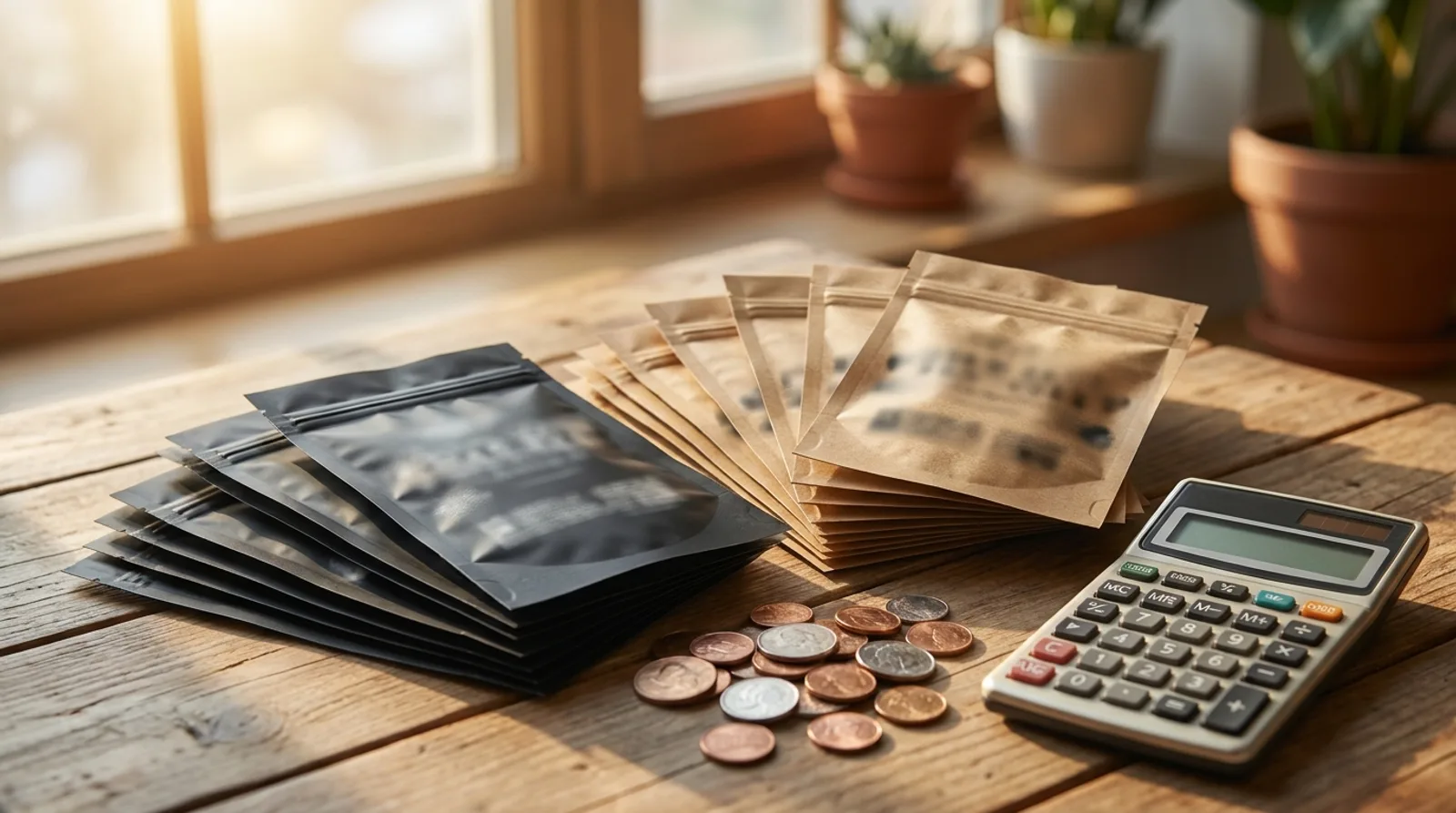
This post walks through a composite case study of a real-world scenario we see regularly: a California-based flower and pre-pack brand that shifted from small-order mylar purchasing to a high-volume bulk procurement strategy. The results speak for themselves. Per-unit costs dropped by roughly 30%, compliance headaches shrank, and fulfillment lead times tightened up considerably.
Let's dig into exactly how that happened, and what you can replicate in your own operation.
The Problem with Small-Batch Mylar Sourcing
Most cannabis brands start out buying mylar bags in quantities of a few hundred or a few thousand units at a time. This makes sense early on. Volume is uncertain, SKUs are still being refined, and capital is tight.
However, that approach doesn't scale well. As your brand grows, the per-unit cost of small-lot orders becomes a drag on your margin. You also face inconsistent quality between orders, unpredictable lead times, and the constant risk of a packaging stockout right before a big drop.
What a Typical Small-Batch Cost Structure Looks Like
Consider a brand running three SKUs: a 3.5g flower bag, a 7g bag, and a 14g bag. At low volumes, say 500 units per SKU per month, you might pay anywhere from $0.45 to $0.70 per bag, depending on the supplier and spec.
That sounds manageable. But multiply it across 18 months of reorders, rushed shipping fees, and the occasional reject-and-reorder event, and the true cost creeps much higher than you expect.
Additionally, sourcing in small batches rarely allows you to negotiate custom print runs, which means you're either using plain stock bags or paying a premium for short-run custom prints.
The Shift: Moving to Bulk Mylar Bag Procurement
The California brand at the center of this case study, a mid-size operator with distribution across 40-plus licensed dispensaries, decided to consolidate their mylar bag sourcing after a particularly rough Q2. They had two stockout events in six weeks. Both happened during promotional periods, which compounded the revenue impact.
Their operations manager ran a simple analysis. The conclusion was clear: switching to bulk mylar bags for their cannabis packaging needs, with a minimum run of 10,000 units per SKU, would solve the stockout problem and significantly reduce per-unit cost.
The New Procurement Model in Practice
Here is what the transition looked like in practical terms:
- Order size: Moved from 500 to 10,000+ units per SKU per order
- Frequency: Shifted from monthly reorders to quarterly procurement cycles
- Supplier: Consolidated to a single packaging partner with a Price Beat Guaranteed offer
- Spec: Standardized bag dimensions across SKUs where possible to reduce complexity
- Custom print: Added brand-consistent custom printing at no meaningful premium over plain stock at that volume
The result was a dramatically leaner supply chain with fewer moving parts and far less administrative overhead.
The Numbers: A 30% Per-Unit Cost Reduction
Let's put real figures to this. At their previous average of $0.52 per bag across all three SKUs, the brand was spending roughly $9,360 per month on mylar packaging for their flower line alone (that's 18,000 bags per month across three SKUs).
After the switch to bulk mylar bags for their cannabis packaging pipeline, the per-unit price dropped to $0.365. That's a 30% reduction, essentially matching what the case-study projections promised.
Monthly spend: down to approximately $6,570.
That's a saving of $2,790 per month, or $33,480 per year, on just the flower line. When you extend the same logic to their concentrate pouches and edible packaging, the annual savings number crosses $50,000 without much trouble.
Where the Savings Actually Come From
If you're wondering why the economics shift so dramatically at volume, here's the breakdown:
- Material cost: Suppliers buy film stock in massive rolls. When you order more, you consume more of one roll without changeovers, so the raw material cost per unit falls.
- Setup amortization: Heat sealing, print registration, and zipper application all require machine setup time. That fixed cost gets spread over more units.
- Shipping efficiency: A pallet of 50,000 bags ships at a much lower per-unit freight cost than five separate orders of 10,000 bags.
- Negotiating position: Volume buyers have leverage. A supplier with a Price Beat Guaranteed policy has every incentive to compete hard for a committed high-volume customer.
- Reduced reorder churn: Every small reorder generates admin hours, payment processing fees, and potential expedite charges. Eliminating those saves real money.
Compliance Wins That Came with the Switch
Cost reduction was the headline, but compliance improvements turned out to be an equally valuable outcome. California's cannabis packaging regulations are among the most detailed in the country, covering child resistance, opacity, labeling space, and more.
If you want a thorough breakdown of the regulatory landscape, the Child-Resistant Cannabis Packaging guide is a solid reference point.
When the brand consolidated to a single bulk mylar supplier, they gained something they didn't have before: consistency. Every bag in every run met the same spec, the same film gauge, the same zipper mechanism, and the same child-resistant seal test result.
Compliance Benefits at Scale
Buying in bulk from one vetted source solved several compliance pain points at once:
- Child-resistant seals: Consistent press-to-open or zip-lock mechanisms across all bags, tested to ASTM D3475 standards
- Opaque barrier layers: Verified opacity spec maintained across every production run, eliminating the occasional "clear spot" issue that had caused one of their previous batches to get flagged
- Labeling space: Standardized panel dimensions meant their design team could create templates once and reuse them, reducing label placement errors
- Documentation: A single supplier means a single Certificate of Compliance and a single chain-of-custody document for each product type, which simplifies both internal QA and state audit preparation
The operations manager noted that their compliance-related rework rate dropped by more than 60% in the first six months after the switch. That's not just a cost saving; it's a risk reduction that is hard to put a dollar value on.
Turnaround Improvements: From 3 Weeks to 5 Days
One of the most surprising wins was lead time. The brand had been accustomed to waiting 14 to 21 days for custom-printed mylar bags from their previous multi-supplier setup. That wait forced them to carry more safety stock, which tied up working capital.
With a bulk procurement partner that maintains a standing inventory of their SKU-specific bags, in-stock orders now ship within 5 business days. Even custom-run replenishment orders, with new batch-specific print, turn around in 10 to 12 days rather than three weeks.
That improvement changed how they manage inventory entirely. Instead of buying six weeks of stock to buffer against lead time uncertainty, they now carry three to four weeks of stock. The freed-up working capital, while not immediately visible in P&L, shows up in cash flow and in their ability to invest in other parts of the business.
Choosing the Right Bulk Mylar Bag Spec for Your Products
Not all mylar bags are created equal, and the right spec depends on what you're packaging. Here's a quick breakdown of what to evaluate when you're designing your bulk order.
Film Gauge and Barrier Properties
The standard for cannabis flower pouches is a multi-layer barrier film, typically PET/foil/PE construction. This combination blocks moisture vapor, oxygen, and light, all of which degrade terpene profiles and cannabinoid potency over time.
For high-moisture products like fresh-pressed hash or certain edibles, you'll want a higher-gauge barrier layer. For dry flower or pre-ground products, a standard 3.5 mil to 5 mil gauge performs well.
Keeping your cannabis stored fresh between packaging and purchase is closely tied to humidity management too. You can learn more about that at the humidity control and cannabis storage guide.
Zipper and Seal Options
Reclosable mylar pouches with child-resistant press-to-open zippers are the most common format for California flower retail packaging. However, some brands also use heat-seal-only pouches for single-use formats like pre-weighed concentrate pouches or disposable sample sizes.
At bulk volumes, you can afford to run two or three different seal formats without significantly disrupting your cost structure, because each SKU still clears the volume threshold for per-unit savings.
Sizing the Bag to the Product
Getting bag dimensions right matters more than many operators realize. An oversized bag wastes film, looks unprofessional on shelf, and can create air pocket issues that affect perceived freshness. An undersized bag risks tearing on the fill line.
For 3.5g flower, the standard is roughly 4 x 6 inches. For 7g, 5 x 7.5 inches is a common spec. For 14g or half-ounce packs, 7 x 9 inches or similar gives adequate room for fill and seal.
How Render's Price Beat Guaranteed Offer Works in This Context
One of the key reasons this brand achieved the savings they did is that they sourced through a supplier offering a Price Beat Guaranteed policy. That kind of commitment changes the dynamic of a supplier negotiation.
Instead of gathering quotes and hoping your preferred vendor comes in low, you can bring competing quotes directly to the table. The supplier either beats the price or you walk with full confidence you made the right call. For high-volume mylar bag orders, even a $0.01-per-unit improvement represents thousands of dollars annually.
Render's pricing model for bulk mylar bags is built around exactly this dynamic. Volume thresholds trigger automatic price breaks, and the Price Beat Guaranteed offer ensures you're not leaving savings behind if a competitor quotes lower.
If you're already spending money on cannabis packaging supplies, the question isn't whether bulk purchasing saves you money. The question is how soon you start.
Frequently Asked Questions About Bulk Mylar Bag Purchasing
What is the typical minimum order quantity for bulk pricing?
Most suppliers start bulk pricing breaks at around 1,000 units, with more meaningful breaks at 5,000 and 10,000. Some premium custom-print runs require 5,000 as a minimum. For stock bag orders, quantities of 500 can sometimes access a step-down price, though the real economics kick in above 5,000.
Can I get custom printing at bulk pricing?
Yes, and in fact custom printing becomes more cost-effective at bulk quantities. Short-run digital printing on 500 bags carries a significant per-unit premium. At 10,000 units, flexographic or digital printing costs are amortized to a point where they add only a few cents per unit.
How do I store a large inventory of mylar bags?
Mylar bags are flat, stackable, and take up relatively little warehouse space compared to rigid containers. A standard wooden pallet holds tens of thousands of flat-pack bags. Keep them in a cool, dry area away from direct sunlight to prevent film degradation.
Does buying in bulk lock me into a single design?
Not necessarily. Many brands run quarterly design refreshes or seasonal limited-edition prints. With a supplier that offers reasonable minimum quantities per print variant, you can maintain design flexibility while still hitting the volume thresholds for pricing.
The Bottom Line for Cost-Conscious Cannabis Operators
According to research on cannabis industry operating margins published by MJBizDaily, packaging costs represent 5 to 15% of total cost of goods for many cannabis brands. For a brand doing $2 million in wholesale revenue, that's $100,000 to $300,000 in annual packaging spend.
Shifting even 60% of that spend to bulk mylar bags in your cannabis packaging operation, at a 30% per-unit savings, frees up $18,000 to $54,000 per year. That money can fund new product development, expanded marketing, or simply stronger operating margins in a market where every point counts.
The brand in this case study didn't do anything exotic. They ran a cost analysis, consolidated their supplier relationships, committed to higher order volumes, and held their supplier accountable with a Price Beat Guaranteed agreement. You can do the same thing starting with your next order cycle.
If you're ready to get serious about cannabis packaging cost reduction, bulk mylar procurement is one of the clearest, most straightforward paths available to you. The math works. The compliance benefits are real. And the supply chain stability you gain is worth the upfront commitment.