

Wholesale packaging quotes look simple until you compare two bids side by side. A lower unit price on a jar means nothing if the closure, label, and freight push your finished cost higher than the competing quote. Comparing wholesale packaging quotes at the component level gives you a number that actually matters: total cost per finished, shelf-ready unit. This guide walks you through building that comparison yourself.
Why the Quoted Unit Price Is Only Part of the Story
Suppliers quote what they sell. A container supplier quotes containers. A label printer quotes labels. A closure vendor quotes closures. None of them automatically includes the others. When you receive wholesale packaging quotes from multiple sources, each quote may cover a different scope. Combining them into one true cost requires a simple worksheet approach.
The goal is a single cost-per-unit figure that accounts for every physical component that leaves your facility attached to a finished product. That includes the container, the closure, the label or labels, any secondary packaging, and a fair share of inbound freight.
Define Every Component Before You Request Quotes
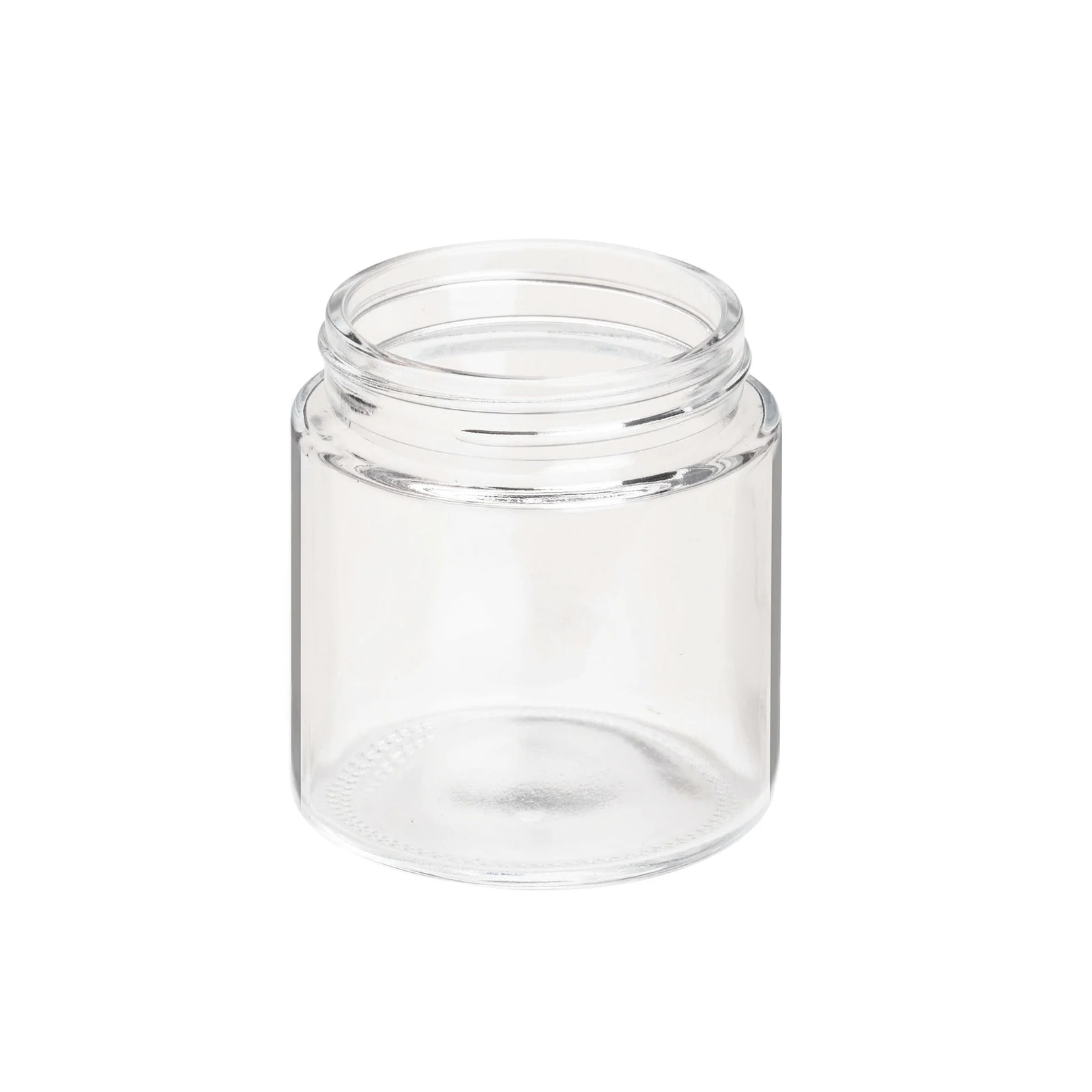
Before you contact a supplier, list every component in your packaging assembly. Do this per SKU. A fill-and-finish operation that runs three product sizes will have three separate component lists, and the per-unit math must be done separately for each.
A typical component list for a single cannabis concentrate SKU might include:
- Primary container (for example, a 5 mL glass jar)
- Closure (child-resistant cap or standard cap, depending on your compliance path)
- Inner liner or silicone insert, if applicable
- Sidewall label
- Lid label or top label
- Tamper-evident band or shrink sleeve, if used
- Retail case or display tray
- Master shipping case
Every item on that list has a unit cost. Every item also has a minimum order quantity, which is the smallest quantity a supplier will ship. Mismatched minimums between components are one of the most common planning problems buyers encounter when comparing wholesale packaging quotes.
Build a Cost-Per-Unit Worksheet
A worksheet does not need to be complicated. A spreadsheet with one row per component and columns for quantity ordered, total cost, and unit cost handles most situations. The final row adds all unit costs together and gives you the finished cost per unit.
Here is a hypothetical example. All numbers below are illustrative and are not Render Packaging prices or quotes.
Hypothetical SKU: 5 mL concentrate jar, 1,000-unit run
- Glass jar: $0.38 per unit
- Child-resistant closure: $0.14 per unit
- Silicone liner: $0.06 per unit
- Sidewall label (printed): $0.09 per unit
- Lid label (printed): $0.07 per unit
- Retail display case (24-count): allocated at $0.08 per unit
- Inbound freight, all components combined: allocated at $0.05 per unit
Hypothetical total: $0.87 per finished unit
If a competing quote offers the same jar at $0.34 but requires a different closure at $0.19 and has a higher freight cost, your worksheet will show whether the savings on the jar actually produce a lower total. Run the same column structure for every quote you receive. Do not compare a single line item. Compare the finished row.
Allocating Freight Across Components
Freight allocation is the step most buyers skip, and skipping it produces inaccurate totals. The method is straightforward. Take the total inbound freight cost for a shipment and divide it by the number of units that shipment supports.
If you pay $180 in freight to receive 2,000 jars, $180 divided by 2,000 equals $0.09 per jar. If closures arrive in a separate shipment with a $60 freight charge covering 2,000 units, that adds $0.03 per unit. Freight allocation is always hypothetical until you have an actual invoice, so build it into your quote comparison using your supplier's estimated freight rate or a rate from a recent comparable shipment.
Some suppliers offer free freight above a certain order value. Factor that into the worksheet by setting freight to zero for qualifying orders. If you must split an order to meet two different minimums, the freight picture changes. Run the numbers both ways.
Matching Case Counts and Minimums
Case counts affect per-unit economics in two ways. First, they determine how many units you must commit to. Second, they affect how you store and handle components before use.
Suppliers typically pack components in standard case quantities, for example 24 jars per retail tray and 288 jars per master case. If your label supplier sells labels in rolls of 1,000 and your jar supplier sells jars in cases of 288, your smallest matched order without leftovers is a multiple of the least common multiple of those two numbers. In practice, most buyers accept small overages on one component. Understanding your case counts before placing an order prevents a situation where you run out of closures 40 units before the jars are gone.
When comparing wholesale packaging quotes, confirm case quantities explicitly. Ask each supplier: how many units per inner case, and how many inner cases per master carton? Record those numbers in your worksheet. They affect both storage planning and the freight math above.
Barcode Placement: A Practical Note
If your finished units carry a barcode, placement must be resolved before labels go to print. GS1 US identifies barcode placement as part of product packaging planning; their site at gs1us.org is a useful starting point for understanding that context. In practice, a few things matter at the pre-press stage: the barcode needs adequate quiet zone, which is the blank space on either side of the bars; the label stock and print process must produce sufficient contrast for reliable scanning; and the final printed pack should be checked with a verifier before a full label run is committed.
On small containers such as concentrate jars, label real estate is limited. Confirm barcode dimensions and placement with both GS1 and your label printer before approving artwork. Do not finalize label dimensions in a wholesale packaging quote without accounting for the barcode footprint.
A Checklist for Evaluating Wholesale Packaging Quotes
Use this checklist when a quote arrives. It takes less than ten minutes and catches most common gaps before you commit.
Quote completeness
- Does the quote cover every component you listed, or only some?
- Are unit costs stated at a specific quantity? (Costs often change at volume breaks.)
- Is freight included, or quoted separately?
Minimums and case counts
- What is the minimum order quantity for each component?
- What is the case count per inner and master carton?
- Do minimums across components align, or will you carry excess stock of any item?
Specification match
- Does the quoted container match your fill volume and closure thread size?
- Does the closure match the container neck finish?
- Does the label material suit the container surface (glass, plastic, matte, glossy)?
Compliance scope
- Does the quote include any certified claim, or is compliance your responsibility to verify? Confirm regulated label copy and any required certifications with your compliance reviewer before placing an order.
Label and barcode
- Is barcode placement defined on the artwork?
- Has quiet zone and contrast been reviewed with the printer?
Totals
- Have you added all component unit costs to reach a finished unit cost?
- Have you allocated freight per unit?
- Have you compared finished unit costs, not just primary container prices?
Comparing Two Quotes: What the Worksheet Reveals
When you run two complete wholesale packaging quotes through the same worksheet, patterns emerge. A supplier with lower container pricing may use a higher label minimum that creates overstock. A supplier with higher per-unit closure costs may include freight above a certain order value, which closes the gap or reverses it entirely.
The worksheet also surfaces specification gaps. If Supplier A quotes a 53-400 closure and Supplier B quotes a 58-400 closure, they are not quoting the same assembly. The first two numbers in those codes refer to diameter in millimeters; the second set refers to thread style. A closure that does not match your container neck finish will not seat correctly. Catching this in a quote comparison is far less costly than catching it after a production run.
Component-level comparison also exposes lead time mismatches, though lead times are not part of the cost math. If one component has a longer lead time than the others, it sets your production start date. Note lead times in a separate column. They are not part of your per-unit cost, but they are part of your go-to-market plan.
Applying the Worksheet to Concentrate Packaging
Concentrate containers present a specific version of this challenge. The containers are small, which means label area is limited and label printing costs per unit can be proportionally higher than for larger jars. The closures on concentrate containers often involve a silicone insert or liner, which is a separate line item that buyers sometimes overlook when comparing wholesale packaging quotes.
Render Packaging carries 5 mL clear glass straight-base concentrate containers as part of its catalog. When you build a cost comparison for a concentrate SKU, start with the container spec sheet to confirm fill volume, neck finish, and overall dimensions. Then confirm that your closure source is quoting a matching neck finish. Then confirm that your label printer has the container dimensions needed to produce a label that fits the sidewall without overlapping the base or the lid.
The worksheet does not change for concentrate packaging. The components are smaller, but the structure of the comparison is identical.
Next Steps: Requesting Quotes That Support Clean Comparisons
The clearest way to get comparable wholesale packaging quotes is to send each supplier the same specification sheet. Include container dimensions, fill volume, neck finish, closure type, label material and dimensions, required case quantities, and ship-to location. A supplier who receives a complete spec can quote the complete scope. A supplier who receives a vague request will quote whatever is easiest, and that quote will not compare cleanly against others.
Once you have quotes in hand, populate your worksheet before you reply to any supplier. The comparison takes less time than the back-and-forth of asking for clarifications after you have already verbally committed. And the finished unit cost you calculate is a number you can defend internally when someone asks why you chose a particular supplier.
Explore the full Render Packaging catalog to confirm specifications for jars, closures, labels, and concentrate containers before you send your next quote request. If your SKU requires custom dimensions or print, the custom packaging section is a practical starting point for scoping that conversation with the team.

