How to Order Bulk Pre-Roll Tubes Wholesale: Sizes, Materials, and MOQ Explained
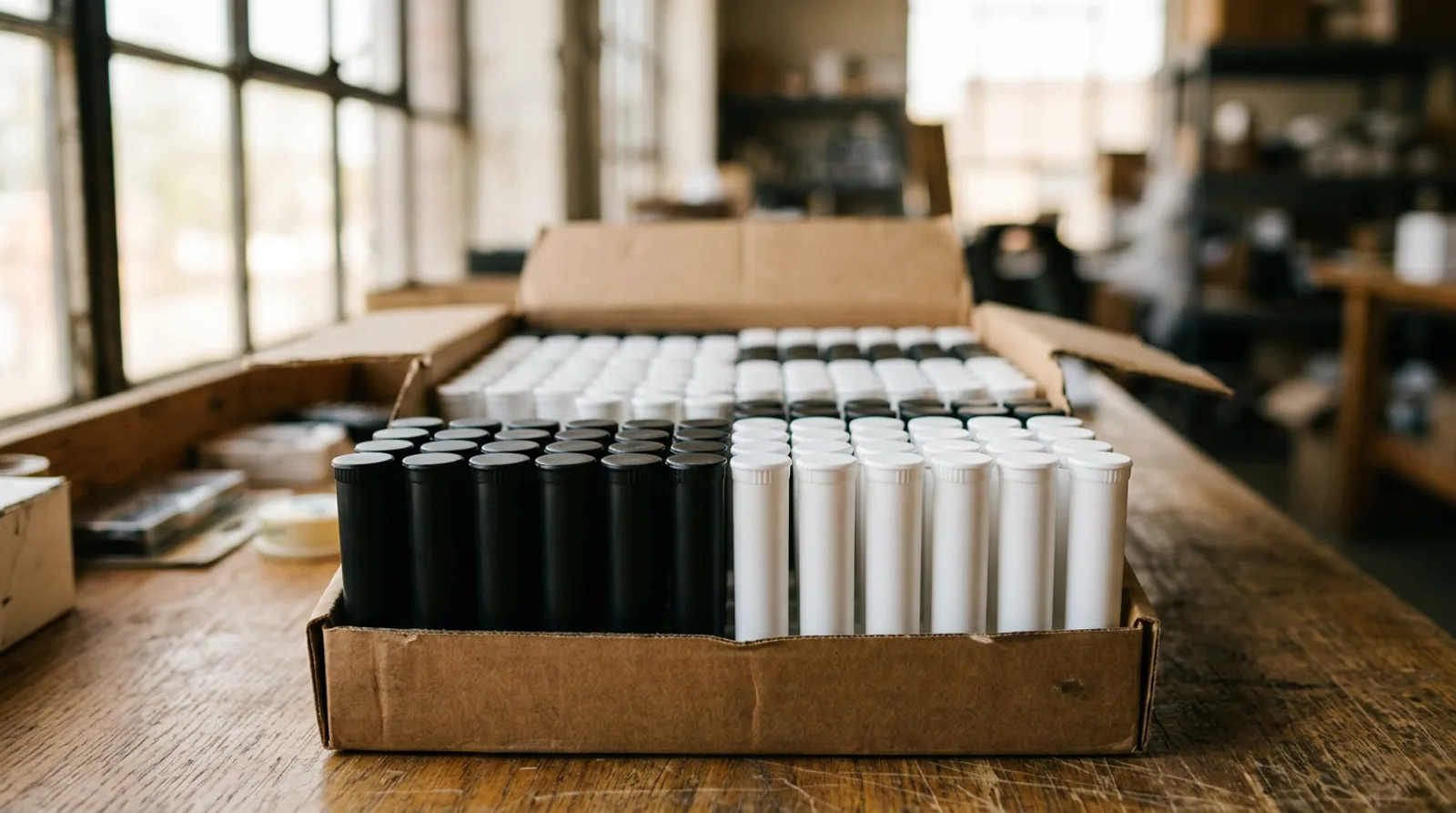
Sourcing bulk pre-roll tubes wholesale is one of the most straightforward ways to control packaging costs and keep your production line moving, but only if you understand the sizing standards, material trade-offs, and order quantity math before you place your first PO. This guide walks you through every decision point, from choosing the right tube diameter to negotiating minimum order quantities (MOQs) with suppliers.
Whether you run a licensed dispensary, a white-label pre-roll brand, or a multi-state operator scaling fast, these fundamentals apply to your operation.
Why Buying Pre-Roll Tubes in Bulk Wholesale Makes Sense
The unit economics are the obvious draw. When you buy pre-roll tubes at retail quantities, you might pay $0.40 to $0.80 per tube. At wholesale volumes, that cost often drops to $0.08 to $0.20 per unit, sometimes lower for very large runs. Across tens of thousands of pre-rolls per month, that difference compounds quickly.
Beyond cost, bulk ordering gives you supply chain consistency. You lock in a single SKU, a consistent color and finish, and the same child-resistant mechanism every time. Your staff doesn't need to adapt their process every few weeks because tubes are slightly different from a new vendor.
There are also labeling benefits. When you order large quantities from a single supplier, you can invest in custom printing or pre-cut label dies sized to your exact tube. That kind of branding consistency is difficult to achieve when you're cobbling together small orders from multiple sources.
Understanding Pre-Roll Tube Sizes
Before you contact any supplier about wholesale pricing, you need to know which tube size matches your product format. Tubes are generally measured in two dimensions: length (in millimeters) and inner diameter.
Common Lengths
- 83mm tubes: These fit standard 1-gram pre-rolls rolled in a 1 1/4 size cone. This is the most common format in most recreational markets.
- 109mm tubes: These accommodate king-size or 1.5g pre-rolls. They're also popular for slim cigarette-style rolls.
- 116mm tubes: A less common length, used for longer specialty cones or brand-differentiated formats.
- 120mm tubes: Often used for jumbo or 2g pre-rolls and infused sticks where the product itself is longer.
Diameter Matters Too
Most standard pre-roll tubes have an inner diameter between 10mm and 14mm. The exact fit depends on the cone size you're using.
- Slim or 84mm cones typically need a 10mm to 11mm inner diameter.
- Standard 1 1/4 cones usually fit a 12mm to 13mm inner bore.
- King-size cones often need 13mm or wider to avoid crushing the tip.
A tube that's too tight will crumple the filter or tip on entry. A tube that's too loose means the pre-roll rattles inside and can break during shipping. For a deeper breakdown of how cone dimensions match to tube dimensions, the Pre-Roll Tube Size Guide covers this in thorough detail.
Material Options: Plastic vs. Glass
When you're ordering pre-roll tubes in bulk, material choice is probably the second most important decision after sizing. Each material has a real cost, compliance, and branding profile.
Plastic Pre-Roll Tubes
Plastic (usually polypropylene or PET) remains the dominant material in wholesale pre-roll tube orders, and for good reason.
Advantages of plastic tubes:
- Lower cost per unit, especially at high volumes
- Lighter weight reduces shipping costs when you're moving pallets
- Impact-resistant, so breakage during distribution is minimal
- Available in clear, frosted, black, white, and custom colors
- Compatible with most label adhesives and shrink-sleeve applications
Disadvantages of plastic tubes:
- Less premium perception at retail
- Some consumers have environmental concerns about single-use plastic
- May not maintain humidity as effectively as glass over time
For brands selling at accessible price points or in high-volume retail channels, plastic is the standard choice when sourcing wholesale pre-roll tubes.
Glass Pre-Roll Tubes
Glass tubes carry a premium signal that many craft and lifestyle brands actively want. They communicate quality and are increasingly popular in elevated product lines.
Advantages of glass tubes:
- Higher perceived value at point of sale
- Better at preserving aroma because glass is non-porous
- Recyclable and more sustainable than most plastic options
- Visually distinct on dispensary shelves
Disadvantages of glass tubes:
- Higher cost per unit, especially in smaller wholesale orders
- Heavier shipping weight increases freight costs
- More vulnerable to breakage during transport and retail handling
If your brand already leans into a premium or artisan positioning, glass is worth the added cost. You can learn more about glass pre-roll packaging specifically in the Glass Pre-Roll Tubes: The Sustainable Choice resource.
Child-Resistant vs. Standard Closures
This is a compliance issue, not just a design preference. Most adult-use cannabis markets in the United States require pre-roll packaging to be child-resistant at the point of sale. Understanding which format you need before placing a wholesale order prevents expensive mistakes.
How Child-Resistant Tubes Work
Most child-resistant pre-roll tubes use one of two mechanisms:
- Push-and-turn caps: The consumer presses down on the cap while rotating it. This is the most widely tested and accepted CR mechanism.
- Squeeze-and-pull designs: Soft-sided tubes that require simultaneous squeezing of both sides while pulling upward. These are common in flexible or pop-top formats.
The Child-Resistant Cannabis Packaging: A Practical Compliance Guide for Licensed Brands is an excellent reference for understanding exactly which states require CR packaging and what testing protocols are accepted.
When Standard Closures Are Acceptable
Some wholesale buyers operate in markets that allow non-CR packaging for certain product types, or they sell products that are already sealed inside a CR outer bag or box. In those cases, standard pop-top or cork-style closures are fine and will reduce your per-unit cost.
Always check your state's current regulations before defaulting to standard closures, even if a supplier tells you they're widely used. Regulations vary significantly and change frequently.
Labeling Compatibility for Wholesale Tube Orders
Labeling is often an afterthought in the wholesale sourcing conversation, but it directly affects your per-unit cost and regulatory compliance.
Label Panel Dimensions
The cylindrical surface of a pre-roll tube offers limited real estate. For an 83mm tube with a 12mm diameter, the printable circumference is roughly 37mm wide and about 50 to 55mm tall (leaving space for the cap). That's tight for the mandatory warning text, THC percentage, batch number, and brand logo that most states require.
When you order bulk pre-roll tubes wholesale, ask your supplier for the exact label panel dimensions and whether they supply die-cut label templates. Many do.
Pre-Printed Tubes
For high-volume orders, pre-printed tubes eliminate the label application step entirely. Your branding, required warnings, and compliance text are printed directly onto the tube during manufacturing. This option generally becomes cost-effective when you're ordering 25,000 units or more, and it gives your finished product a cleaner, more professional appearance.
Shrink Sleeves
Shrink sleeve labels wrap the full tube and shrink to conform when heat is applied. They cover more surface area than flat labels, making it easier to fit all required text. They also provide tamper-evidence, which some markets require. However, shrink sleeve application requires either specialized equipment or an outsourced labeling run, which adds cost and lead time to your workflow.
How to Calculate Your Wholesale Order Quantity
This is where many brands either under-order (creating supply gaps) or over-order (tying up cash in slow-moving inventory). A simple calculation prevents both problems.
Start With Your Monthly Volume
Estimate how many pre-rolls your operation produces or sells per month. Be honest here. Use your actual sales data if you have it, not your aspirational projections.
For example: if you sell 8,000 pre-rolls per month, that's your baseline consumption rate.
Apply a Safety Stock Multiplier
Most packaging consultants recommend holding 4 to 6 weeks of safety stock. This buffer covers supplier lead times (typically 3 to 6 weeks for overseas bulk orders), customs delays, and unexpected sales spikes.
Using the example above:
- Monthly consumption: 8,000 units
- Safety stock (6 weeks): 12,000 units
- Suggested order quantity: 20,000 units minimum per order cycle
Factor in MOQ Requirements
Most wholesale pre-roll tube suppliers set MOQs somewhere between 1,000 and 10,000 units for stock items. Custom colors, pre-printing, and specialty materials usually push MOQs to 25,000 units or higher.
If your safety stock calculation lands below the supplier's MOQ, you have two choices: accept slightly more inventory than you need right now, or negotiate with the supplier. Many suppliers will reduce MOQs slightly for repeat customers or for buyers who commit to multiple orders per year.
Unit Cost vs. Cash Flow Trade-off
Larger orders mean lower per-unit cost, but they also mean more cash tied up in packaging inventory. For brands with tight operating margins or seasonal sales patterns, ordering at 3-month intervals may make more sense than ordering a 6-month supply at once, even if the per-unit cost is marginally higher.
A practical framework: calculate the total dollar savings of a larger order versus the carrying cost of the extra inventory. If your cost of capital (what that cash could otherwise earn or save you) exceeds the unit savings, the smaller order actually makes more financial sense.
What to Ask Suppliers When Sourcing Wholesale Pre-Roll Tubes
When you contact a supplier for a bulk quote, come prepared with specific questions. Vague inquiries lead to vague quotes.
Key questions to ask:
- What is your MOQ for stock vs. custom items?
- Do you offer child-resistant closures on this tube size, and are they CPSC-compliant?
- What are your lead times for domestic warehouse stock vs. overseas production?
- Can you provide a label template or die-cut spec sheet?
- Do you offer pre-printing, and at what MOQ does it become available?
- What quality control certifications do you hold?
- Are your plastics food-grade or pharmaceutical-grade?
- What are your payment terms for first-time wholesale buyers?
Getting clear answers upfront avoids surprises at receiving. It also signals to suppliers that you're a serious buyer, which can positively influence pricing and service priority.
Pairing Pre-Roll Tubes With Pre-Roll Jars
Many brands sell both individual pre-rolls in tubes and multipacks in jars. If you're already sourcing wholesale tubes, it makes sense to coordinate your jar orders at the same time.
Buying both from a single supplier simplifies invoicing, shipping logistics, and reorder management. It also opens the door to package pricing negotiations that aren't available when orders are split across multiple vendors.
For guidance on selecting the right jar format to complement your pre-roll line, the The Ins and Outs of Pre-Roll Jars: A Comprehensive Guide covers the options in detail.
Compliance and Safety Standards to Know
Before finalizing any wholesale pre-roll tube order, verify that the products meet applicable standards in your market.
The Consumer Product Safety Commission (CPSC) sets the federal testing protocols for child-resistant packaging effectiveness. Products sold as CR must pass either the standard senior-friendly/child-resistant protocol (CFR 16 Part 1700) or the special packaging standard for cannabis products where applicable.
Additionally, check whether your state's cannabis regulatory body has specific requirements for tube opacity, tamper-evidence, or required label placement. California, Colorado, and Michigan, for example, each have somewhat different rules around what must appear on single-serving pre-roll packaging.
Getting a Bulk Quote for Pre-Roll Tubes
Sourcing bulk pre-roll tubes wholesale doesn't need to be complicated, but it does require a bit of preparation. Know your tube size, your monthly volume, your compliance requirements, and your labeling strategy before you reach out to any supplier.
When you have those details in hand, requesting a quote is fast. Render Packaging's team works directly with pre-roll brands and dispensaries to match tube specifications to order quantities and budget constraints. Whether you need 5,000 units of a standard 109mm CR tube or a fully custom-printed 83mm glass tube run at 50,000 units, a direct conversation is the fastest way to get accurate pricing.
Reach out for a bulk quote and let the specifics drive the conversation.