Glass vs. Plastic Jars for Cannabis: Which Packaging Wins for Your Product Line?
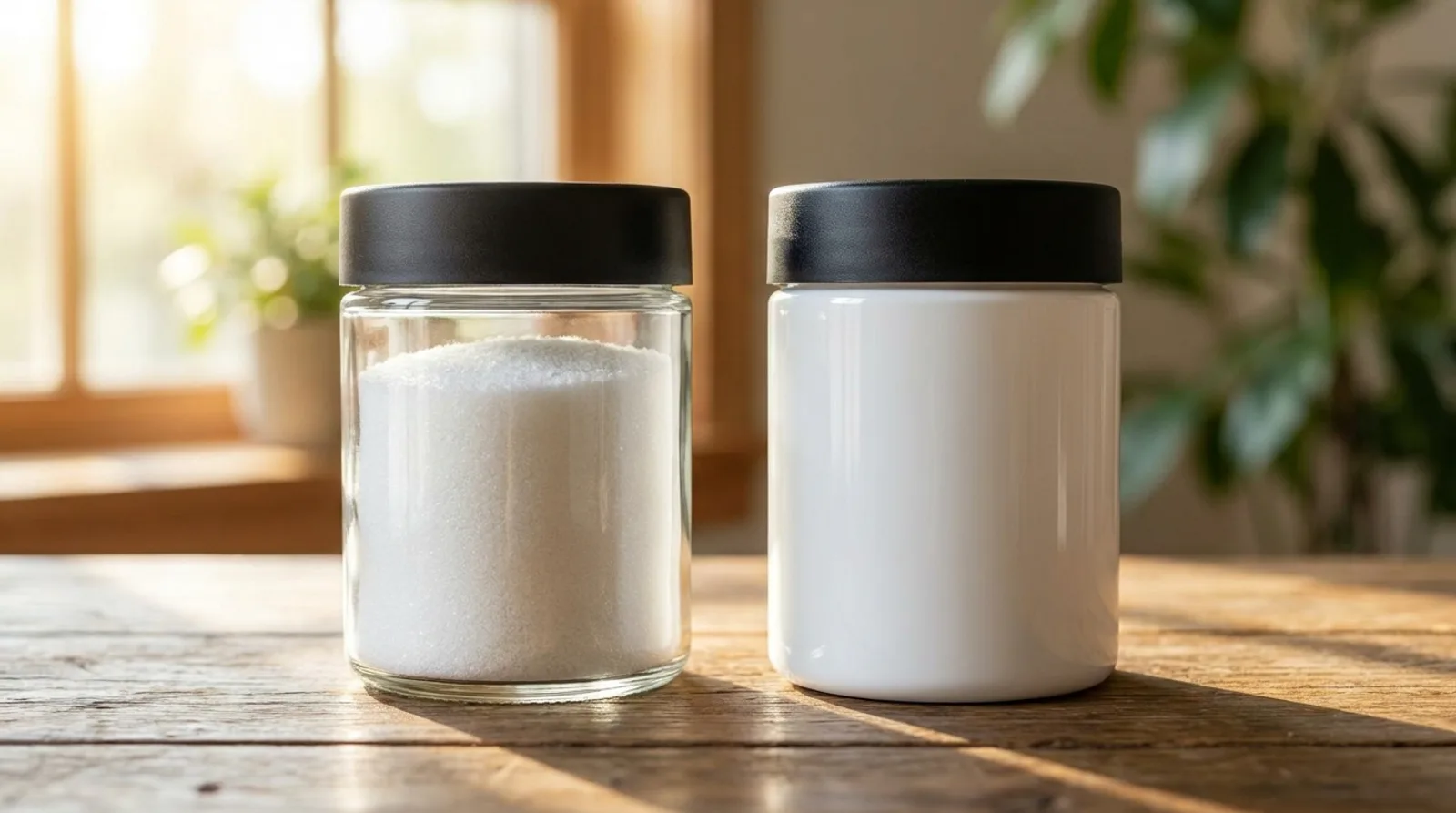
Glass vs. plastic jars for cannabis is one of the most consequential decisions you will make when building or refreshing your product line. The container you choose affects everything from product freshness and regulatory compliance to your brand's shelf presence and your bottom line. Both materials have real strengths, and neither is the automatic winner for every brand or every SKU. This guide breaks down the key trade-offs so you can make a confident, informed decision before your next wholesale order.
Why the Glass vs. Plastic Jars Cannabis Debate Matters More Than Ever
The legal cannabis market is maturing fast. Consumers now walk into dispensaries expecting the same level of packaging sophistication they see in premium food, spirits, and wellness products. A thoughtfully chosen jar communicates quality before a customer ever opens the lid.
At the same time, operators face real business pressures: state compliance requirements, shipping costs, sustainability scrutiny, and tight margins. The container format you select sits at the intersection of all those pressures, which is why so many brand owners spend considerable time evaluating glass versus plastic before committing to a SKU.
Let's work through the six factors that matter most.
Factor 1: UV Protection and Product Freshness
Cannabinoids degrade when exposed to light, particularly UV radiation. Research published by the National Library of Medicine has confirmed that light exposure is one of the primary drivers of THC degradation in stored cannabis, outranking even temperature and humidity in some conditions.
Glass handles this challenge well when paired with the right treatment. Amber glass blocks a significant portion of UV and visible light, making it a popular choice for flower and concentrate SKUs where potency preservation is critical. Clear glass, while visually appealing, provides essentially no UV protection on its own.
Plastic varies widely. Standard clear PET or polypropylene offers little UV defense. However, opaque or UV-inhibiting plastic formulations close that gap meaningfully. If your product spends time in a brightly lit retail case, the color and material of your container both matter, regardless of whether you choose glass or plastic.
The verdict here: Amber or UV-coated glass leads for light-sensitive products. Opaque plastic is a credible alternative when transparency is not a brand priority.
To understand more about preserving terpenes and potency through smart storage choices, check out how humidity control can improve your cannabis storage.
Factor 2: Child-Resistance
Every licensed cannabis brand in the United States must meet child-resistant packaging requirements under state law, and many states reference federal PPPA standards as their baseline. This applies to both glass and plastic containers, so neither material gets a free pass.
Glass jars achieve child resistance through the cap, not the jar body itself. Push-and-turn caps and squeeze-and-turn lids are widely available for standard glass jar mouth sizes (38mm, 50mm, 53mm, and larger). The jar itself is inert from a compliance standpoint; the lid does the work.
Plastic jars follow the same logic. The good news is that child-resistant closures are abundantly available for the most common plastic jar thread sizes, and many plastic jar SKUs ship with compliant lids already included.
One practical difference: glass paired with a metal or polypropylene child-resistant cap can sometimes feel more secure to consumers because the combination feels heavier and more deliberate. Plastic jar and cap combos can achieve the same certification ratings but may carry a perception of being lighter or less "locked down," even when they are fully compliant.
For a thorough walkthrough of what compliance actually requires, the Child-Resistant Cannabis Packaging practical compliance guide covers state-by-state requirements and closure specifications in detail.
Factor 3: Weight, Shipping, and Logistics
This factor often surprises brand owners who focus heavily on aesthetics. Weight has a direct cost impact, especially at scale.
Glass is heavier. A standard 3 oz glass jar can weigh three to five times more than a comparable plastic jar before any product is added. Multiply that across a pallet of units and you are looking at meaningfully higher freight costs, especially for brands shipping finished goods to fulfillment partners or moving bulk inventory between states.
Glass also breaks. Breakage rates during transit are low with proper cushioning, but they are never zero. Each breakage event wastes product, wastes packaging material, and creates a disposal headache. Brands shipping fragile glass inventory typically invest in more protective secondary packaging, which adds both cost and waste.
Plastic is lighter and essentially shatterproof. For high-volume, logistics-heavy operations, that combination is a genuine operational advantage. Pre-roll jar SKUs in particular, which are often smaller and shipped in large quantities, benefit from the durability and weight savings of plastic.
The verdict here: Plastic wins on pure logistics efficiency. If your distribution model involves significant freight or e-commerce fulfillment, factor weight into your cost-per-unit analysis.
Factor 4: Cost Per Unit
Speaking of cost per unit, let's be direct. Plastic jars are almost always less expensive than equivalent glass jars, often by 30% to 60% depending on volume, size, and wall thickness.
For a budget-conscious brand, especially one launching a value-tier product or competing in a commoditized flower segment, that cost difference is significant. On a run of 10,000 units, saving even 20 cents per jar adds up to $2,000 in recovered margin.
Glass commands a premium for good reasons: material cost, manufacturing complexity, and the weight-related shipping costs already discussed. When you factor in the full landed cost (unit price plus freight plus breakage buffer), the gap between glass and plastic often widens beyond the catalog price difference alone.
However, cost per unit is not the only financial variable. Perceived value affects retail pricing power. A glass jar can justify a higher retail price point, which may offset its higher unit cost. The math depends entirely on your brand positioning and your target customer.
The verdict here: Plastic wins on raw unit economics. Glass can win on net margin if it supports a higher retail price and your brand positioning supports that premium.
Factor 5: Shelf Presence and Brand Perception
Walk into any premium dispensary and notice which products command attention on the shelf. Glass jars, especially clear glass with well-designed labels, have a visual weight and clarity that plastic rarely matches.
Glass communicates quality, permanence, and care. It is the same reason fine food brands, premium skincare lines, and craft spirits use glass despite its higher cost and weight. When your target customer is a connoisseur who is comparing your top-shelf flower against a competitor's, the glass container signals that you take your product seriously.
Plastic, meanwhile, has made enormous strides. Modern matte-finish polypropylene or high-clarity PET jars look far better than the utilitarian plastic containers of ten years ago. Paired with a well-executed label, a quality plastic jar can present professionally in the mid-tier market. For pre-roll jars specifically, where the form factor is compact and the jar itself is secondary to the product inside, plastic performs very well aesthetically.
The honest reality is that shelf perception is partly material and partly execution. A poorly labeled glass jar loses to a well-branded plastic jar every time. Your label design, finish choices (matte vs. gloss, embossed vs. flat), and overall packaging system matter as much as the substrate.
For guidance on matching the right jar format to specific product types, the article on how to select the right marijuana jar for different strains is a useful resource.
The verdict here: Glass leads for premium and luxury positioning. Plastic is competitive in mid-tier and value markets, and dominant for pre-roll and multi-unit formats.
Factor 6: Sustainability Perception
Sustainability has become a purchasing signal for a meaningful segment of cannabis consumers, particularly in markets like California, Colorado, and the Pacific Northwest. How your packaging story reads matters.
Glass has a strong sustainability perception because it is infinitely recyclable and made from natural materials. That perception is partly earned: glass does recycle efficiently and does not leach chemicals into products or the environment. However, glass production is energy-intensive, and the weight of glass increases carbon emissions during transportation.
Plastic has a more complicated story. Most cannabis plastic packaging is made from PET or polypropylene, which are technically recyclable but face real-world recycling infrastructure gaps. Post-consumer plastic recycling rates remain low in the United States. On the other hand, the lighter weight of plastic means lower transportation emissions, and newer bio-based or recycled-content plastics are beginning to enter the market.
Neither material is a clear winner on sustainability. The honest answer is that the most sustainable packaging is the one your customer actually returns or recycles, which depends more on your take-back program and your local recycling infrastructure than on the material itself.
If sustainability is a core pillar of your brand story, consider pairing your material choice with a return or reuse program. You can explore more strategies in this overview of eco-friendly marijuana packaging options.
Pre-Roll Jars: A Special Category
Pre-roll jars deserve their own mention because they sit in a distinct use case. Pre-rolls are typically small, lightweight, and purchased frequently. The jar format for pre-rolls prioritizes:
- Compact footprint for retail display
- Secure closure to prevent crushing
- Odor containment
- Child resistance
Both glass and plastic pre-roll jars serve these needs, but plastic dominates in this category because the weight and cost savings are most pronounced at the smaller sizes. A small plastic pre-roll jar can be nearly indistinguishable from glass on a well-lit shelf when labeled properly, and the cost savings per unit are substantial on high-velocity SKUs.
That said, glass pre-roll jars carry a premium signal that some brands actively want. If your pre-rolls are priced at the top of the market and sold in a high-design dispensary environment, a glass pre-roll jar reinforces the positioning in a way that plastic simply cannot match at the same level.
Side-by-Side Summary: Glass vs. Plastic for Cannabis Jars
Here is a quick reference comparison across all six factors:
- UV Protection: Glass (amber) wins; plastic needs opaque formulation to compete
- Child-Resistance: Tie; both achieve compliance through the cap, not the jar body
- Weight and Logistics: Plastic wins; lighter, shatterproof, lower freight cost
- Cost Per Unit: Plastic wins; typically 30% to 60% less expensive before freight
- Shelf Presence: Glass wins for premium; plastic competitive in mid-tier
- Sustainability Perception: Glass wins on perception; real-world impact is more nuanced
How to Decide: Questions to Ask Before You Order
Before placing a wholesale order, work through these questions with your team:
- What is your retail price point, and does it justify the higher cost of glass?
- How much of your product is light-sensitive, and do you need UV protection?
- What are your freight logistics? Are you shipping nationally or distributing locally?
- What does your target dispensary shelf look like, and what do competing products use?
- Does your brand story lean into premium or value positioning?
- Do your customers respond to sustainability claims, and will you back those claims with a real program?
There is no single correct answer. Many successful brands run glass jars for their top-shelf flower SKUs and plastic jars for their value-tier and pre-roll lines simultaneously. The choice does not have to be all-or-nothing.
Building Your Container Strategy Around Real SKU Options
A strong packaging strategy starts with understanding which sizes and formats actually serve your product catalog. Whether you lean toward glass or plastic, having the right volume options (2 oz, 3 oz, 4 oz, 6 oz, 10 oz) and the right mouth sizes to accommodate certified child-resistant closures is the foundation.
Render carries a full range of both glass and plastic jar SKUs, including options purpose-built for pre-rolls, flower, and concentrates, so you can compare real-world options side by side without sourcing from multiple vendors. Evaluating both materials from a single supplier makes it easier to run true apples-to-apples cost comparisons and to standardize your closure hardware across your product line.
The glass vs. plastic jars cannabis conversation ultimately comes down to your brand, your customer, and your margin model. Use the framework in this guide to pressure-test your assumptions, and you will arrive at a container strategy that serves your product line for the long term.