What California Cannabis Packaging Compliance 2026 Means for Your License
California cannabis packaging compliance 2026 is reshaping how licensed operators source, design, and deploy every container that touches a regulated product. If you run a dispensary, cultivation facility, or manufacturing operation in California, staying ahead of these packaging rules is not optional. The Department of Cannabis Control (DCC) continues to refine its requirements, and the gap between compliant and non-compliant packaging is getting harder to close once an audit begins.
This post breaks down the most important packaging trends and regulatory priorities heading into 2026, and maps them to practical container and closure solutions so your operation stays protected.
Why California Cannabis Packaging Compliance 2026 Deserves Fresh Attention
California's regulatory framework for cannabis packaging was already among the strictest in the country. However, as the market matures and the DCC gains more enforcement experience, the agency is tightening its focus on three specific areas: child-resistance verification, labeling accuracy, and opaque or tamper-evident construction.
Operators who set up compliant packaging in 2021 or 2022 and never revisited their supply chain may be operating on outdated assumptions. Standards evolve, testing protocols get updated, and the products you used to rely on may no longer satisfy current interpretations of the rules.
The good news is that a proactive audit of your packaging lineup now puts you in a much stronger position before any regulatory sweep happens.
Core Requirements Shaping the 2026 Landscape
Before diving into trends, it helps to anchor everything to the actual regulatory pillars. California's cannabis packaging rules sit primarily under the DCC's regulations, which are informed by the Medicinal and Adult-Use Cannabis Regulation and Safety Act (MAUCRSA). Here are the foundational requirements every operator must satisfy.
Child-Resistant Standards
All cannabis products sold at retail must be in child-resistant (CR) packaging. The standard that California references aligns with the federal Poison Prevention Packaging Act (PPPA), which specifies that packaging must be "significantly difficult for children under five years of age to open" while remaining accessible to adults.
There are two accepted approaches. First, the package itself can be certified as child-resistant. Second, the retailer can place the product inside a child-resistant exit bag at the point of sale if the primary package is not independently CR-certified.
For most licensed brands, the cleanest compliance path is sourcing primary packaging that already meets CR standards. This removes ambiguity at every point in the supply chain and puts you in control of the customer experience.
Opaque Packaging Requirements
California requires that cannabis products not be visible through the packaging. This rule applies at point of sale and during transport. The intent is to prevent products from appearing attractive or accessible to minors who might see them in a retail setting or in transit.
Opaque packaging also reinforces brand professionalism. A matte or foil-laminated finish on a mylar bag, for example, satisfies the opacity rule while giving your product a premium shelf presence.
Tamper-Evident Construction
Tamper-evident features must be present so that consumers can tell if a package has been opened or compromised before purchase. This requirement is especially important for edibles and infused products, where the visual appearance of the product offers few cues about whether it has been handled.
Seals, shrink bands, induction liners, and breakaway closures all satisfy this requirement in different ways depending on the container format.
Labeling Requirements
California's labeling rules are detailed and non-negotiable. Every compliant label must include:
- The universal cannabis symbol
- A government warning statement
- The net weight or volume of the product
- The cannabinoid content expressed as total THC and total CBD
- The license numbers of all applicable licensees in the supply chain
- A manufactured date and a best-by or expiration date
- Batch or lot number for traceability
- Instructions for safe use and storage
Labels must be printed clearly and must not be misleading. The DCC pays particular attention to any design element that could make a product appear appealing to children, including cartoon imagery, bright candy-like colors, or names that mimic popular snack foods.
For a broader look at how labeling requirements fit into the larger national regulatory picture, see Understanding Legal Marijuana Packaging Requirements in the US.
Trend 1: Shift Toward Certified CR Primary Packaging
One of the clearest trends heading into 2026 is that operators are moving away from relying on retail exit bags as their primary compliance solution. Regulators have signaled greater scrutiny of exit-bag-only approaches, and brands are recognizing that certified CR primary packaging is more defensible during an inspection.
This means increased demand for CR caps in specific diameters matched to the jars or tubes a brand already uses, as well as pre-roll tubes, concentrate containers, and flower jars that come CR-certified from the manufacturer.
If you use plastic jars as your primary container format, pairing them with a child-resistant cap that matches the jar's neck diameter is the most straightforward way to hit this requirement. Render offers CR caps in 33mm, 38mm, 50mm, and 57mm sizes, covering the majority of common jar formats on the market.
For operators who want to go deeper on how CR certification works and what testing standards mean in practice, the Child-Resistant Cannabis Packaging: A Practical Compliance Guide for Licensed Brands is a thorough resource.
Trend 2: Opaque Mylar Bags Are Gaining Ground for Flower and Edibles
Opaque mylar bags have become one of the fastest-growing packaging formats in California for good reason. They satisfy the opacity requirement natively, they provide an excellent moisture and oxygen barrier to preserve freshness, and they offer large printable surfaces for compliant labeling.
As the DCC increases enforcement attention around packaging that allows any product visibility, clear or semi-transparent packaging without an opaque outer layer is becoming a compliance liability.
Well-constructed mylar bags with resealable zippers and heat-sealed bottoms also satisfy tamper-evident requirements when the initial seal is intact. After the consumer opens the bag the first time, the resealing zipper extends product freshness, which is a secondary benefit regulators and consumers both appreciate.
For operators running multipack pre-rolls or larger flower quantities, opaque mylar is especially practical. The format scales well from single-gram servings to larger bulk consumer sizes.
Trend 3: Tamper-Evident Features Moving from Optional to Expected
Two or three years ago, many brands treated tamper-evident features as a nice-to-have. As we move into 2026, regulators and dispensary buyers are treating them as a baseline expectation on par with child resistance itself.
Several factors are driving this. Insurance carriers that work with cannabis brands are starting to ask compliance questions during underwriting. Multi-state operators entering California from other regulated markets bring standards that include tamper-evidence as a default. And consumers, increasingly familiar with pharmaceutical and food packaging norms, are skeptical of products that show no tamper indication.
Practically, this means every container you use should have at least one of the following:
- An induction-sealed liner under the cap
- A shrink-wrap band around the closure
- A breakaway or click-to-open feature built into the cap design
- A peel-back seal under the lid that leaves a visible mark once opened
CR caps with built-in tamper-evidence, such as those with a breakaway ring on first opening, address both requirements with a single component.
Trend 4: Traceability and Label Verification Are Getting More Scrutiny
California's seed-to-sale traceability system, powered by Metrc, ties every compliant product to a chain of custody. In 2026, DCC enforcement is expected to cross-reference packaging label data more systematically against Metrc records. Batch numbers, license numbers, and cannabinoid potency figures on labels will be spot-checked against the digital record.
This trend has a direct packaging implication. Your label print specifications need to be tight enough to produce readable batch codes, QR codes if you include them, and license numbers that survive the shelf life of the product without fading, smearing, or peeling.
Labels printed on materials that resist moisture and UV degradation perform significantly better in retail environments. If you are sourcing pre-printed labels, test them against the containers they will be applied to before committing to a large run.
For operators who want practical guidance on building labels that work, Crafting the Perfect Custom Marijuana Labels: Elevating Cannabis Packaging Business covers design and print specifications in detail.
Trend 5: Sustainability Pressure Is Building Alongside Compliance
California's environmental regulations are starting to influence packaging choices in ways that intersect with cannabis compliance. The state's extended producer responsibility framework and its restrictions on single-use plastics are creating new expectations for how licensed operators think about their packaging footprint.
This is not yet a DCC compliance requirement in the same direct way that CR standards are. However, municipalities in California are increasingly scrutinizing cannabis packaging waste, and several jurisdictions have proposed local ordinances that would require operators to demonstrate recycling or take-back programs.
The practical implication for 2026 is that operators who build sustainability into their packaging sourcing now will be ahead of requirements that are likely to land within the next one to two license cycles. Choosing containers made from post-consumer recycled content, selecting glass over plastic where format allows, and working with suppliers who can document material provenance are all forward-looking moves.
The California Department of Cannabis Control publishes its current packaging requirements for licensees and updates them as regulations change. Bookmarking this resource and reviewing it at least quarterly is a simple habit that prevents surprises.
Matching Render Products to Each Requirement
Here is a quick map of how Render's core product lines align with the compliance requirements discussed above.
CR Caps (33mm, 38mm, 50mm, 57mm): These satisfy the child-resistant standard when paired with compatible jars. Each size is designed to meet PPPA testing thresholds. Choose the diameter that matches your jar's neck finish.
Child-Resistant Plastic Jars: When the jar and cap are sourced together as a certified CR system, you eliminate the certification ambiguity that comes from mixing components. Render's plastic jar lineup in 2oz, 3oz, 4oz, and larger sizes pairs natively with its CR caps.
Opaque Mylar Bags: These address the opacity requirement and provide a tamper-evident initial seal. The heat-sealed base and resealable zipper are standard features. Available in multiple sizes to cover pre-rolls, flower, edibles, and concentrates.
Child-Resistant Glass Jars: For operators who prefer glass for premium positioning, CR glass jars with certified closures combine the aesthetic and preservation benefits of glass with certified child resistance.
Each of these product categories addresses a specific regulatory checkpoint. Using them together across your product line means fewer single points of failure when an inspector reviews your operation.
Building a Compliance Review Process for 2026
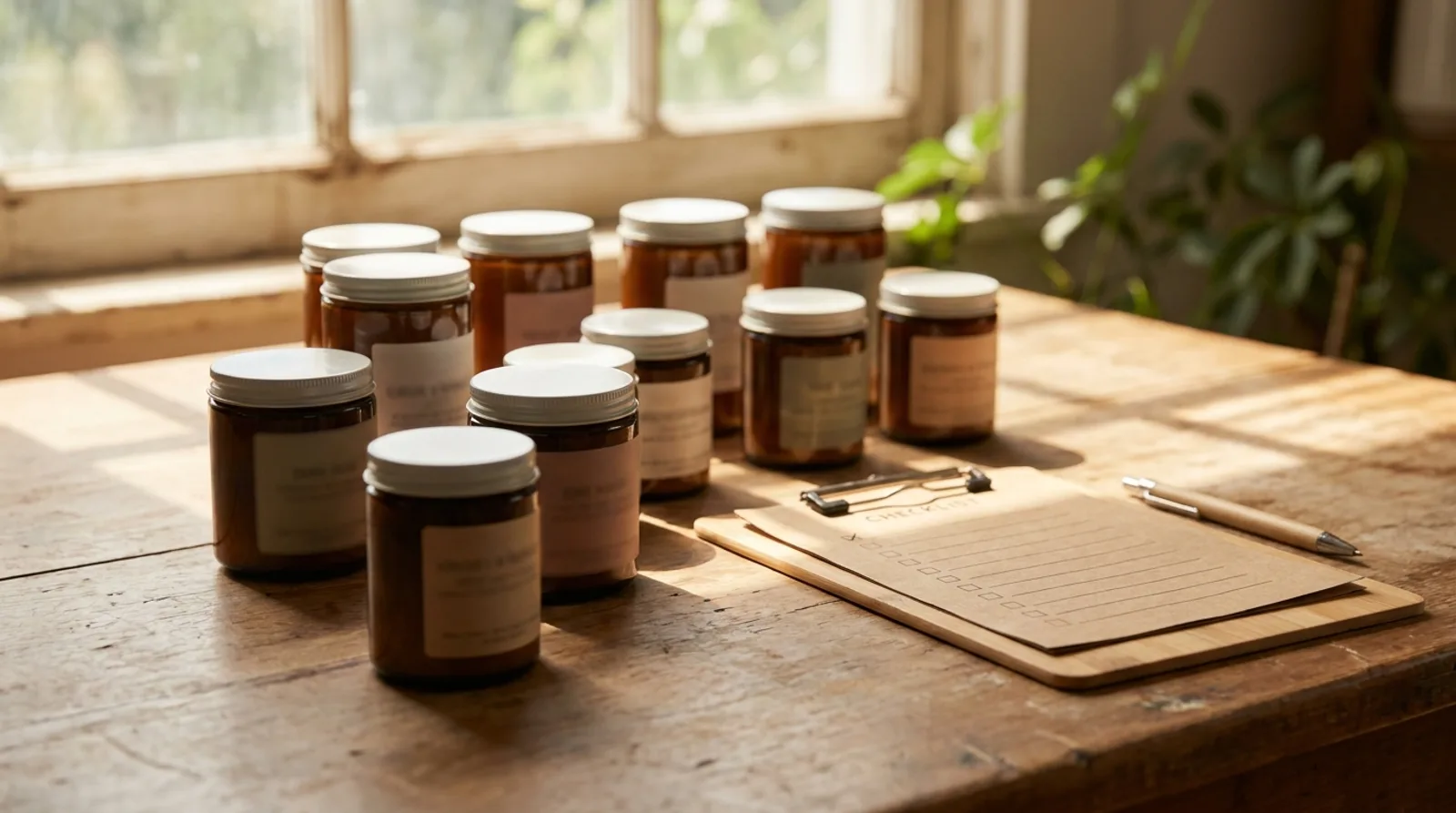
Knowing the rules is the first step. Building an internal process that keeps your packaging compliant as regulations evolve is the harder, more important work.
A useful quarterly review process looks like this:
- Pull the DCC's current packaging regulations and compare them to your active packaging components.
- Verify that your CR packaging certifications are current and that you have documentation available.
- Review your labels against the required element checklist and confirm that batch codes, license numbers, and potency figures are accurate.
- Check that your opaque and tamper-evident features are intact on a sample of packaged products.
- Document the review and store it with your compliance records.
This process takes less than a day per quarter and gives you a defensible paper trail if a compliance inquiry arises. It also flags packaging components that may need to be replaced before they create a violation.
Staying Ahead of California Cannabis Packaging Rules in 2026
California cannabis packaging compliance in 2026 rewards operators who treat their packaging as a dynamic compliance asset rather than a one-time procurement decision. The standards around child resistance, opacity, tamper evidence, and label accuracy are all tightening, and the cost of non-compliance, measured in license jeopardy and destroyed inventory, is far higher than the cost of proactive sourcing.
Render's product lines are built around these requirements. Whether you need CR caps in a specific diameter, opaque mylar bags for flower or edibles, or child-resistant glass or plastic jars for retail-ready presentation, the right compliant solution is available without custom tooling or minimum order volumes that don't make sense for your scale.
Staying current on California cannabis packaging regulations protects your license, your customers, and your brand. The investment in getting it right is one of the most straightforward risk-reduction moves available to any licensed operator.